
3D Foam
When something needs to be large, three-dimensional and light enough to hang off a plasterboard wall, BD Signs routes it from high-density foam. It can be finished to look like anything — brushed metal, aged timber, painted plaster — at a fraction of the weight and cost of the real material.
Last updated
3D Foam, made properly
Logos, giant lettering, shaped display pieces and full props all come off the same CNC bed in the BD Signs factory in Nottingham and are hand-finished afterwards — 30 years in the industry has taught us exactly how far foam can be pushed. It is the technique behind most of the eye-catching dimensional work you see in showrooms, on exhibition stands and in visitor attractions.
- Very large scale without the weight
- Finished to mimic metal, timber or stone
- CNC routed from your artwork
- Cost-effective compared with solid materials
What should you know before ordering 3D foam?
What is a 3D foam sign made from?
High-density foam, routed on the BD Signs CNC from your artwork, then sealed and hard-coated before it is painted. The coating is what turns soft foam into a surface that takes a knock and wipes clean, and it adds strength without adding much weight to the finished piece.
When should you choose foam over metal?
Past a certain size, solid letters get heavy, expensive and difficult to fix. Foam stays light enough for plasterboard and stud partitions, which is why exhibition stands and showroom walls use it. For anything outdoors long term, or within reach of the public all day, metal or acrylic usually lasts better — and BD Signs will tell you so.
Can foam signs go in shopping centres and public venues?
Usually, with the right coating. In shopping centres, venues and attractions, the building's fire strategy may set rules for what can go on the walls — often a Euroclass rating under BS EN 13501-1. Tell BD Signs where the piece is going and we will specify the coating and finish to suit, rather than finding out at sign-off.
How does BD Signs make 3D foam?
Designed in-house, manufactured in our own factory, fitted by our own teams. 30 years in the industry.
- Step 1
Artwork and sizing
Send vector artwork — an .ai, .eps or .pdf with live outlines — or a JPEG for our studio to redraw. We confirm the overall size, the depth of each piece and exactly where it is going before anything is cut.
- Step 2
CNC routing
The shapes are routed from high-density foam on the CNC in our Nottingham factory. Logos, giant lettering and full props all come off the same bed, cut straight from your artwork.
- Step 3
Sealing and hard-coating
Each piece is sealed and hard-coated. The coat is what turns soft foam into a surface that takes a knock and wipes clean, and it is where a fire-rated finish goes when the venue asks for one.
- Step 4
Finishing and fitting
The coated foam is sprayed and hand-finished to look like brushed metal, timber, stone or plaster. Our own teams then fit it, usually with adhesive plus hidden pins or locating studs.
Is 3D foam or fabricated metal right for your sign?
Both give real depth. The difference is weight, where the sign is going and how long it has to last. This is how BD Signs helps customers choose between them.
| Compare | 3D foam | Fabricated metal or acrylic |
|---|---|---|
| Weight | Very light — large pieces can go on plasterboard and stud partitions | Heavy at large sizes — needs a solid wall or fascia and heavier fixings |
| Best for | Feature walls, showrooms, exhibition stands and props | Shopfronts, outdoor signs and anything within reach of the public all day |
| Outdoors, long term | Not usually recommended | Yes — built for it |
| Finish | Hard-coated, then painted to look like metal, timber, stone or plaster | The real material — brushed or polished metal, painted or coloured acrylic |
| Cost at large sizes | Usually lower — less material and lighter fixings | Usually higher — material and fixing costs rise with size |
What fire and fixing rules apply to foam signs?
Uncoated foam is combustible, so where a piece goes matters. In shopping centres, venues, visitor attractions and other public buildings, the landlord or the building's fire strategy may require wall finishes to meet a set fire classification — today usually a Euroclass under BS EN 13501-1, or Class 0 / Class 1 under the older BS 476 tests. Approved Document B of the Building Regulations explains how those classes apply in England.
Tell BD Signs where the piece is going before we quote. If the venue sets a classification, we specify the coating and finish to suit before anything is cut, rather than finding out at sign-off.
Foam is light, but the fixing still has to suit the wall. Small pieces on plasterboard are fixed with adhesive plus hidden pins or locating studs. Larger pieces should go into the studs or use cavity fixings rated for the load, and anything hung overhead or over a walkway needs a mechanical fixing, not adhesive alone.
3D Foam we've made
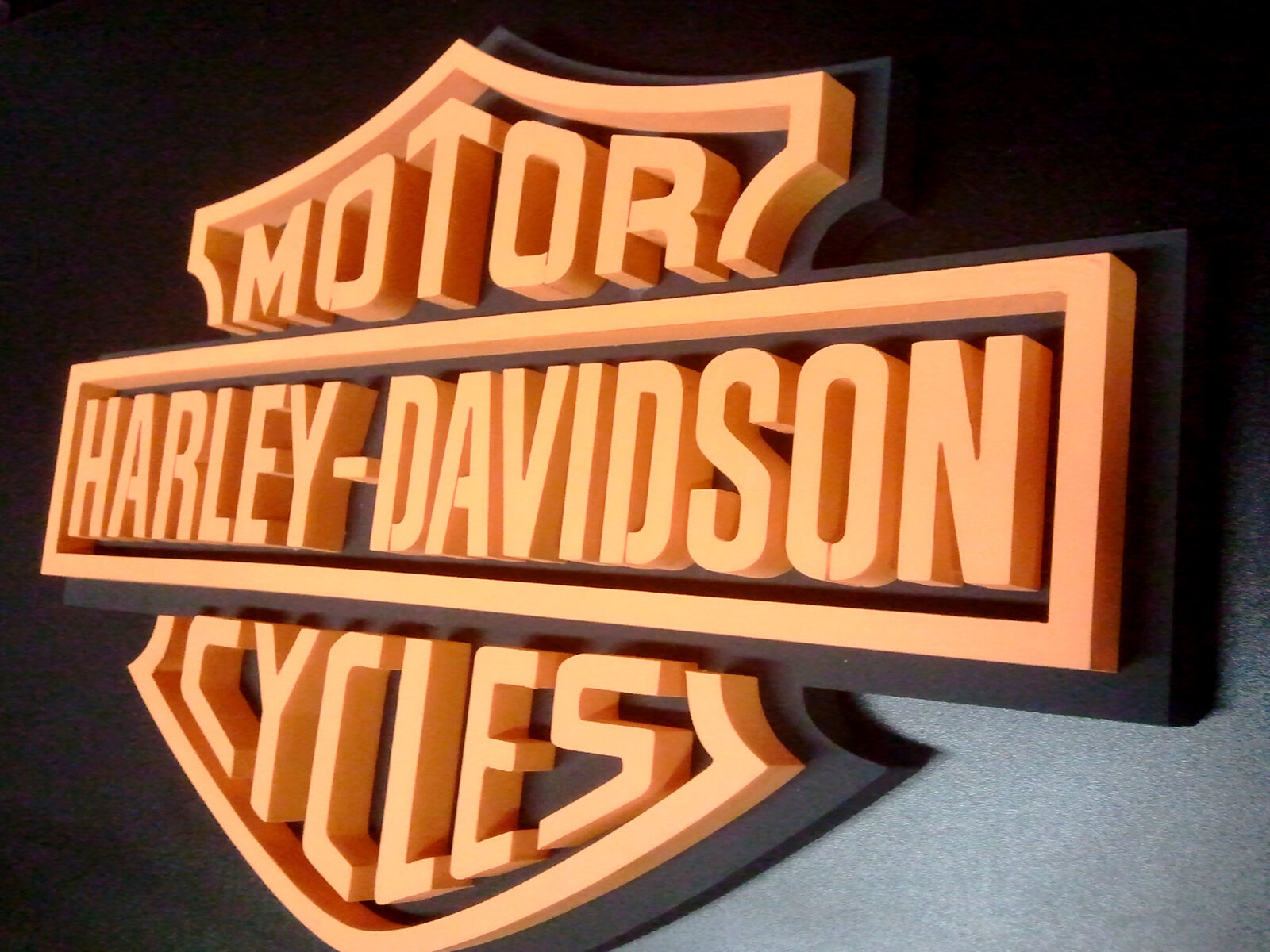
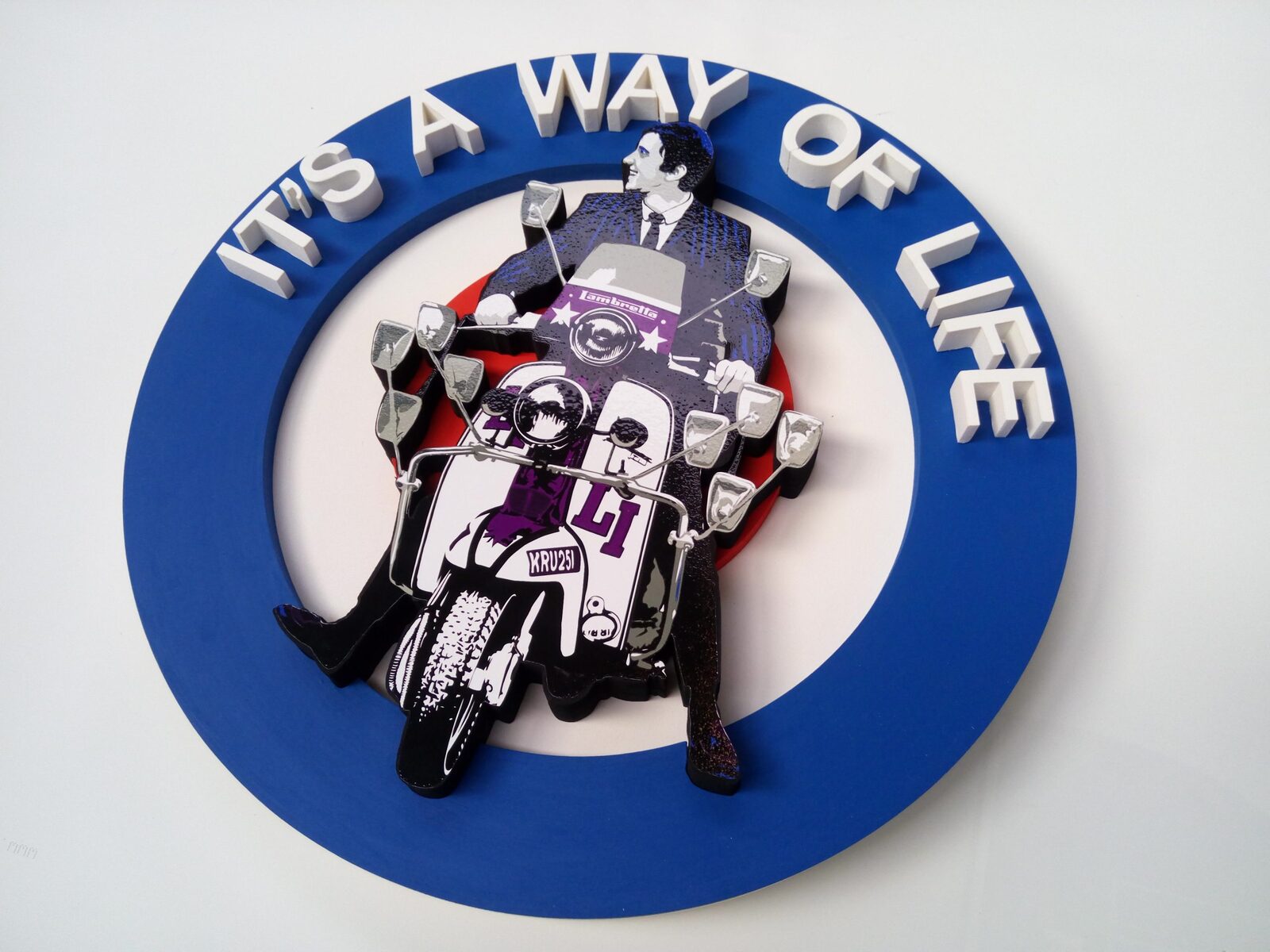
Two BD Signs foam pieces: a Harley-Davidson dimensional display sign and the "It's a way of life" scooter roundel. Both were CNC routed from high-density foam, then hard-coated and finished by hand, giving the depth of a solid sign at a fraction of the weight.
From bare shopfront to finished fit-out
A few of our shop refurbs, start to finish.
What do people ask about 3D foam?
What artwork do you need for 3D foam?
Vector artwork — an .ai, .eps or .pdf with live outlines — gives the cleanest cut. If all you have is a JPEG, the BD Signs studio can redraw it.
Can foam be finished to look like metal or wood?
Yes. Once it is hard-coated it can be sprayed and hand-finished to look like brushed metal, timber, stone or plaster. At normal viewing distance, most people cannot tell.
How is 3D foam fixed?
Usually with adhesive plus hidden pins or locating studs. Because it is so light, it can go on surfaces that would never take a metal letter. Larger pieces, and anything overhead, also get mechanical fixings into the studs or rated cavity fixings.
Other types of sign we make



“Used BD Signs Design and Print services to design a new logo for my company and to design and print some large labels to use on my jobs. Professional service from start to finish. Highly recommended.”
“Excellent service as always. Friendly staff. Highly recommend.”
Need 3d foam?
Tell us about the site and what you want it to say. We will survey, design and quote the whole job as one price.
Or email info@bdsigns.co.uk — we answer everything the same working day.