Push Through & Fret Cut
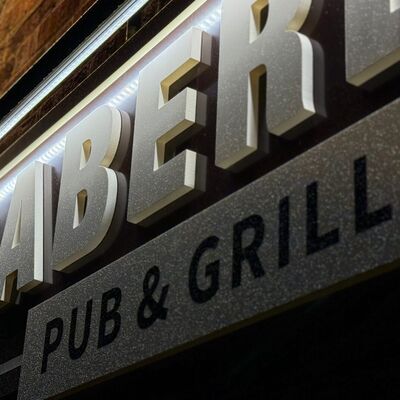
Push through signage sets polished acrylic letters into a CNC-routed tray so they sit slightly proud of the face. Light it from behind and only the letters glow — the panel around them stays solid. Fret cut signs use the same tooling the other way round: BD Signs cuts the shape clean out of the panel, leaving a crisp silhouette.
Last updated
Push Through & Fret Cut, made properly
Both techniques are cut on one router, in our own factory, which is why they often appear on the same sign — a fret-cut logo alongside push-through lettering. It is a hard-wearing, high-end finish that reads well by day and turns into a very clean lit sign after dark.
- Letters glow, panel stays solid when lit
- CNC routed to your artwork exactly
- Deep, tactile finish that resists weathering
- Fret-cut logos, motifs and shaped panels
What should you know before ordering push through & fret cut?
Why does a push-through sign cost more than a flat panel?
Because the lettering is cut twice: once out of the aluminium face, and again out of thick acrylic that fits the hole exactly. That precision is what you pay for. In return, BD Signs gives you a sign where only the letters glow at night and the panel stays dark, which reads far cleaner than a whole box lighting up.
Will my logo work as push-through lettering?
Bold typefaces work well; hairline strokes and small serifs usually do not. Push-through acrylic stands slightly proud of the face, so its edges catch the light, but very fine detail is hard to route and harder still to light evenly. BD Signs flags any part of a logo that needs thickening before anything goes on the router.
Does a fret-cut sign need to be illuminated?
No. A shape cut from aluminium composite or acrylic and stood off the wall throws a crisp shadow in daylight with no lighting at all. BD Signs often suggests it for reception walls and interiors, where a lit box would be too much and printed vinyl would be too little.
How does BD Signs make push through & fret cut?
Designed in-house, manufactured in our own factory, fitted by our own teams. 30 years in the industry.
- Step 1
Artwork check
Send your logo and lettering. The BD Signs studio checks every stroke against what the router can cut and the LEDs can light, and marks any fine detail that should be thickened before the design goes further.
- Step 2
Visual and sizing
You approve a visual of the panel at its real size on your fascia or wall, showing which parts are push-through, which are fret-cut, and how the sign looks both lit and unlit.
- Step 3
Routing and assembly
In our own factory the face is routed, the acrylic is cut to fit each opening, and the tray depth and LED spacing are set for your lettering so it lights evenly rather than in patches.
- Step 4
Installation
Our own teams fit the finished tray or stand-off panel and connect any lighting. Where an existing light box is sound enough to keep, a new routed face can go onto it instead.
Push-through or fret-cut: what is the difference on the wall?
Both come off the same router bed, and plenty of BD Signs panels use the two together. One adds acrylic into the cut; the other leaves the cut shape as the sign.
| Compare | Push-through | Fret-cut |
|---|---|---|
| What it is | Acrylic letters fitted into holes routed in a tray | A logo or shape cut clean out of a panel |
| Lighting | Lit from behind — only the letters glow | Lit or unlit — often stood off the wall unlit |
| In daylight | Letters sit slightly proud of the face | A crisp silhouette with its own shadow |
| Typical use | Shopfront fascias and illuminated signs | Reception walls, interiors and logo panels |
| Artwork | Bold type — fine strokes are hard to light evenly | Clean outlines and distinctive shapes |
Push Through & Fret Cut we've made
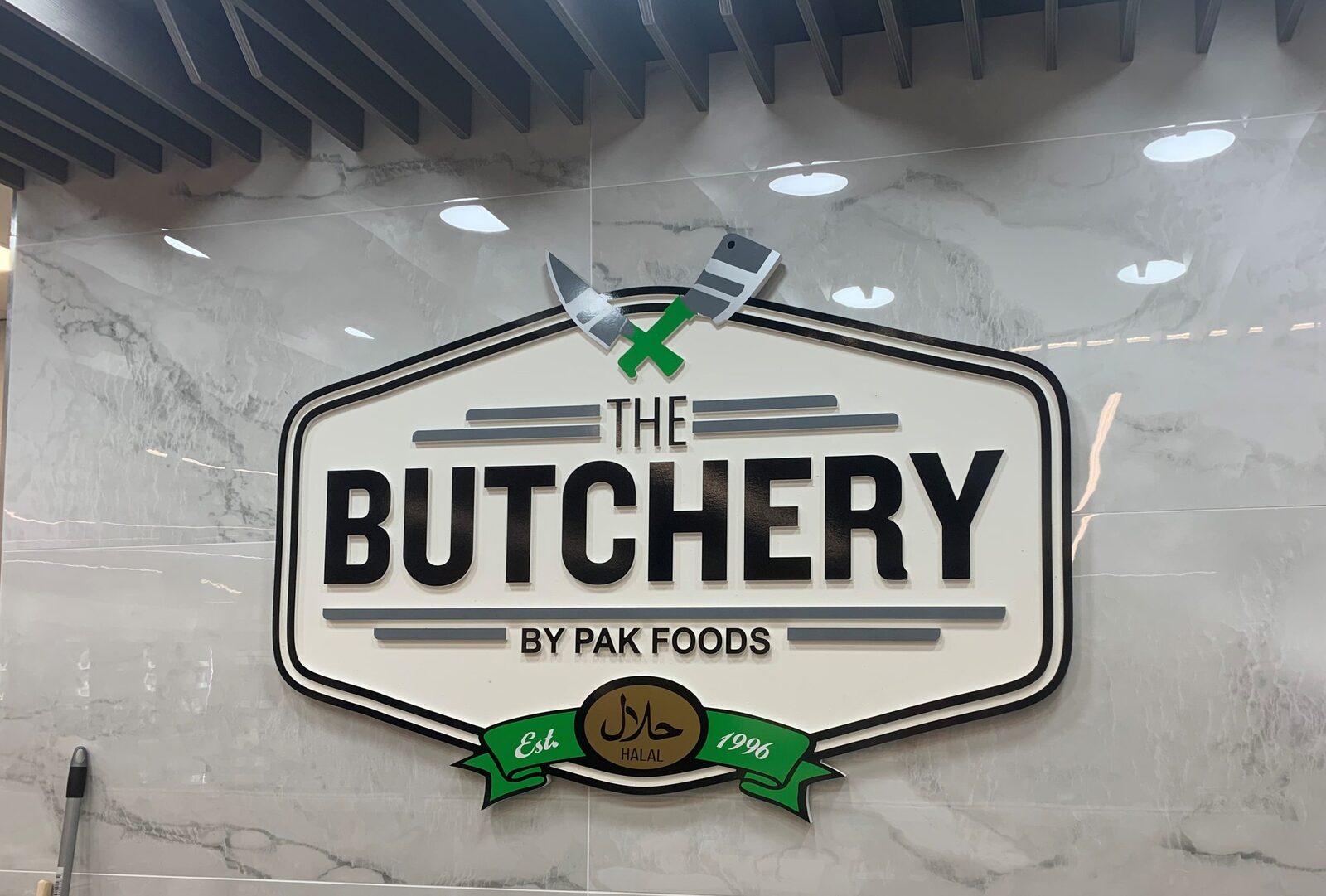
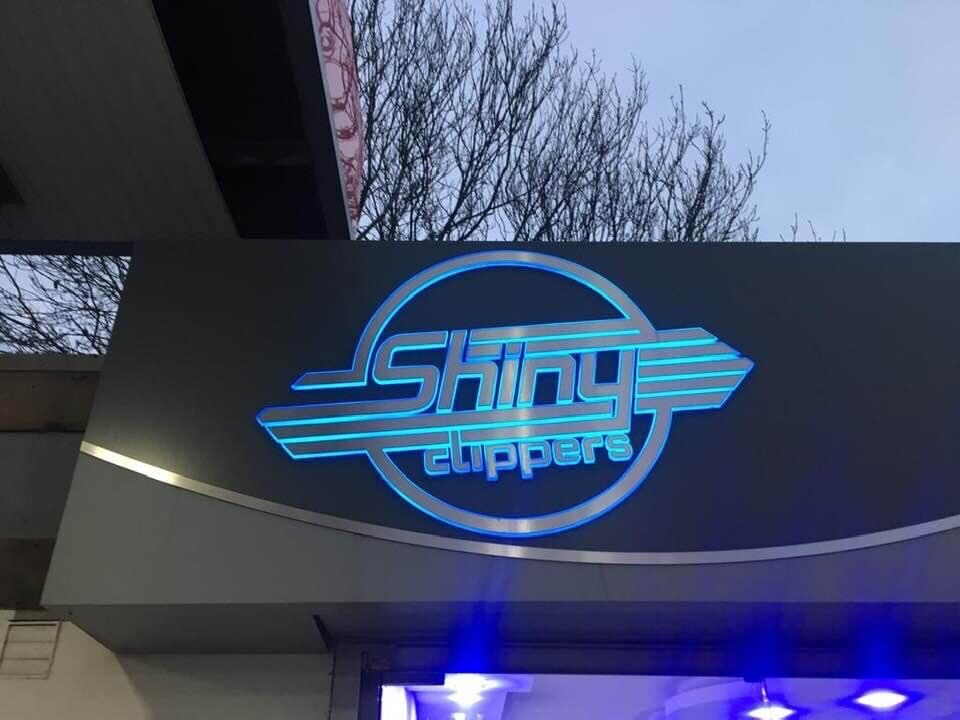
Two examples from BD Signs that show the technique both ways round: a fret-cut shaped panel sign for The Butchery by Pak Foods, where the outline itself becomes the sign, and an illuminated push-through fascia for Shiny Cutters, where the acrylic lettering carries the light. The same routing tooling made both.
From bare shopfront to finished fit-out
A few of our shop refurbs, start to finish.
What do people ask about push through & fret cut?
What is the difference between push-through and fret-cut?
Push-through fits acrylic letters into holes routed in a tray; fret-cut is the cut on its own — a logo or shape taken clean out of a panel. BD Signs makes both on the same machine. They give opposite results, and the two often end up together on one sign.
Can an existing light box be converted to push-through?
Sometimes. If the box is sound and deep enough, BD Signs can fit a new routed face to it. If it is corroded or still lit with fluorescent tubes, a new tray with LED usually makes more sense. We look at it at survey and tell you which is the better route.
Why do some lit signs have patchy lettering?
Usually because the LEDs sit too close to the face or too far apart. A stock box is built for no sign in particular, so dark spots and hot spots are common. BD Signs sets the tray depth and LED spacing for the letters on your sign instead, so each one lights evenly.
Other types of sign we make
“Excellent service as always. Friendly staff. Highly recommend.”
“Excellent service as normal — have used BD Signs for the last 20 years and they have always been very helpful and delivered on time and on price!”
Need push through & fret cut?
Tell us about the site and what you want it to say. We will survey, design and quote the whole job as one price.
Or email info@bdsigns.co.uk — we answer everything the same working day.